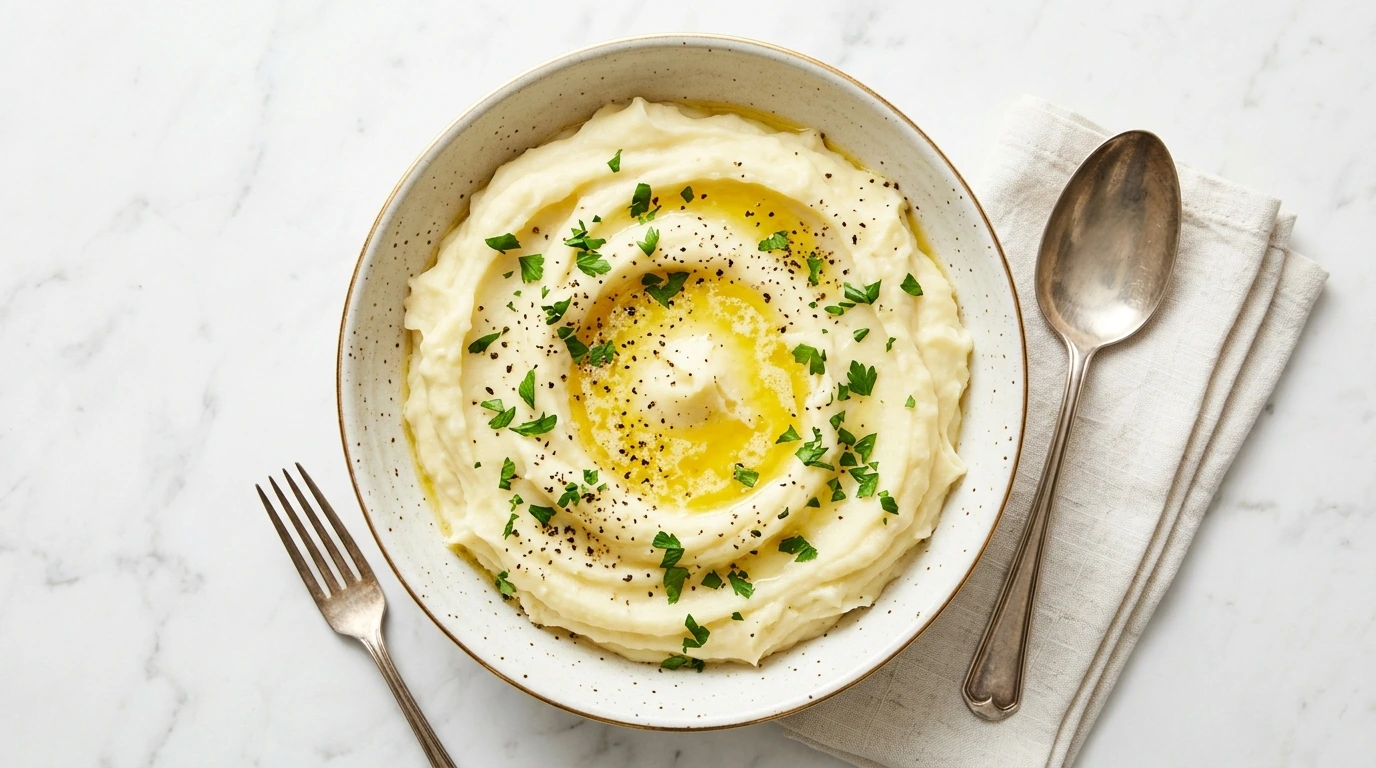
There’s a reason mashed potatoes show up on nearly every comfort-food table, from weeknight dinners to holiday feasts. Done right, they’re pillowy, buttery, and impossible to stop eating. Done wrong, they turn gluey, bland, or watery.
This guide walks through exactly how to make foolproof mashed potatoes every time, plus the tips and variations that take them from good to unforgettable.
Table of Contents
How to Make Perfectly Creamy Mashed Potatoes
Great mashed potatoes come down to three things: the right potato, the right cooking method, and the right mashing technique. Skip any one of these and you’ll end up fighting texture problems no amount of butter can fix.
Choosing the Right Potatoes (Russet vs. Yukon Gold)
Not all potatoes mash equally well. The two best choices are:
- Russet potatoes – High in starch, low in moisture. They break down easily and produce a light, fluffy mash. This is the classic choice for traditional mashed potatoes.
- Yukon Gold potatoes – Slightly waxier with a naturally buttery flavor and pale yellow color. They mash a bit denser and creamier than russets, and many cooks prefer them for their richer taste.
- Avoid waxy potatoes like red potatoes or fingerlings for classic mash they hold their shape too well and can turn gummy when mashed.
If you can’t decide, a 50/50 blend of russets and Yukon Golds gives you the fluffiness of one and the flavor of the other.
The Boiling Method (Cold Start, Salted Water, Doneness Test)
How you cook the potatoes matters just as much as which potatoes you choose:
- Peel and quarter the potatoes into evenly sized pieces so they cook at the same rate.
- Place them in a pot and cover with cold water by about 2cm starting with cold water helps the potatoes cook evenly from the outside in, rather than overcooking the exterior before the center is done.
- Salt the water generously, the same way you would pasta water.
- Bring to a boil, then reduce to a simmer for 15–20 minutes.
- Test doneness with a knife: it should slide in with zero resistance.
Mashing Without Making Them Gluey
This is where most home cooks go wrong. Potatoes contain starch, and the more you agitate them, the more that starch releases resulting in a gummy, paste-like texture instead of a light, fluffy one.
To avoid this:
- Drain thoroughly and let the potatoes sit for a minute or two to steam off excess moisture.
- Use a potato masher or ricer, never a food processor or blender. High-speed mixing overworks the starch almost instantly.
- Warm your dairy first. Cold milk and butter shock the potatoes and make it harder to get a smooth consistency. Gently warming them keeps everything blending smoothly.
- Mix gently and stop as soon as it’s combined. Overmixing, even by hand, can still turn potatoes gluey.
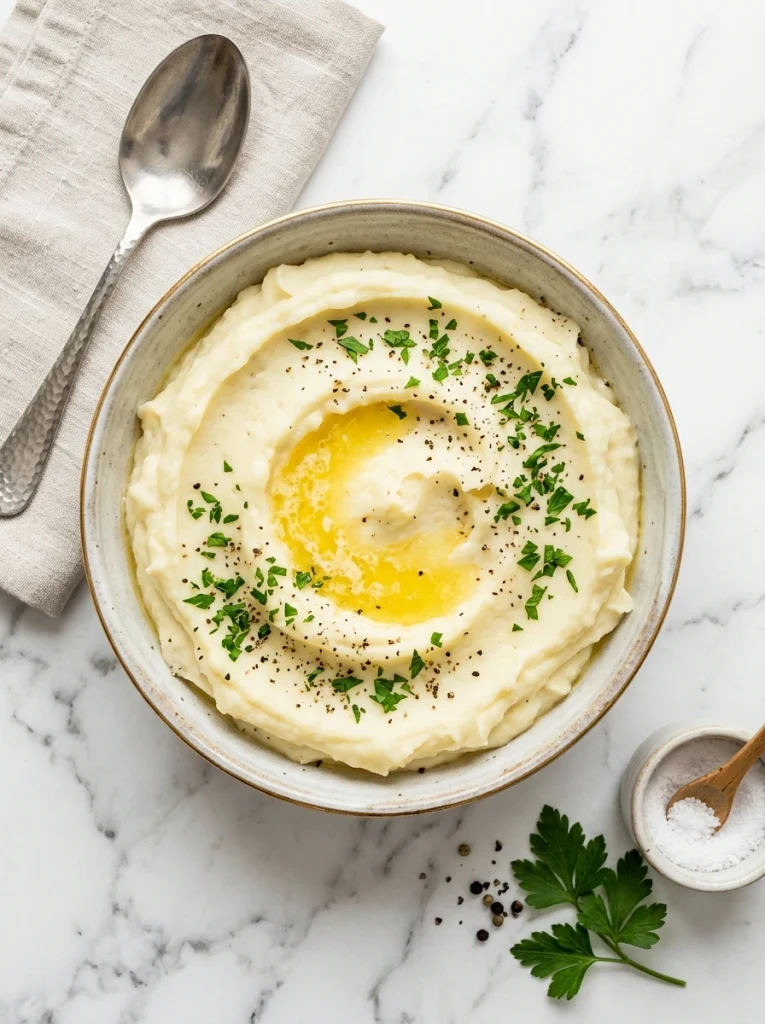
Ingredients You’ll Need
Here’s everything required for a classic batch of mashed potatoes, serving about 4 people:
| Ingredient | Amount (Metric) | Amount (US) |
|---|---|---|
| Potatoes, peeled & quartered | 900 g | ~2 lb |
| Unsalted butter | 85 g | 3 oz |
| Whole milk | 180 ml | ¾ cup |
| Salt | 1.5 tsp | 1.5 tsp |
| Black pepper | ¼ tsp | ¼ tsp |
This ratio produces a rich, well-seasoned mash that’s neither too thick nor too loose. Feel free to scale it up for a crowd just keep the proportions consistent.
Tips, Variations, and Serving Ideas
Once you’ve mastered the base technique, mashed potatoes become a canvas for endless variation.
Common Mistakes to Avoid
- Using cold dairy — always warm your milk and butter before adding them.
- Under-salting the boiling water — this is your main chance to season the potatoes from the inside out.
- Overmixing — stop as soon as the texture looks smooth and combined.
- Skipping the steam-off step — draining and letting potatoes sit briefly prevents a watery mash.
- Using the wrong potato variety — waxy potatoes won’t give you that classic fluffy texture.
Flavor Variations
Mashed potatoes are easy to customize once the base technique is solid:
- Garlic mashed potatoes – Simmer a few smashed garlic cloves right in the potato water, or roast a head of garlic and mash it in.
- Sour cream or cream cheese – Swap a portion of the milk for either to add tang and extra creaminess.
- Fresh herbs – Chives, thyme, or rosemary stirred in at the end add color and freshness.
- Cheesy mash – Fold in shredded cheddar, parmesan, or gruyère while the potatoes are still hot so it melts evenly.
- Brown butter – Swap regular melted butter for browned butter for a deeper, nuttier flavor.
What to Serve With Mashed Potatoes
Mashed potatoes pair well with almost any main course, but a few classic combinations stand out:
- Roast chicken or turkey
- Meatloaf or Salisbury steak
- Braised short ribs or pot roast
- Grilled sausages
- Pan-seared steak with a pan sauce
They also work beautifully as the base for shepherd’s pie or as a side for holiday spreads.
Step-by-Step Recipe Summary
For a quick reference, here’s the full process from start to finish:
- Boil the potatoes in salted, cold-started water until fork-tender (15–20 minutes).
- Check for doneness with a knife it should meet no resistance.
- Drain well and let steam off for a minute or two.
- Warm the milk and butter together while the potatoes drain.
- Mash the potatoes with a masher or ricer until smooth.
- Combine and season, stirring in the warm dairy gradually along with salt and pepper.
- Serve immediately, topped with an extra pat of butter if you like.
Frequently Asked Questions
Can I make mashed potatoes ahead of time? Yes they reheat well in a saucepan over low heat with a splash of extra milk, or in the microwave, stirred halfway through.
What’s the best potato for mashing? Russets for the fluffiest texture, Yukon Golds for a creamier, more buttery result. A blend of both is a great middle ground.
Why are my mashed potatoes gluey? This almost always comes down to overworking the starch either from overmixing, using a food processor, or not draining the potatoes thoroughly before mashing.
Final Thoughts
Mashed potatoes are deceptively simple, but small details potato choice, warm dairy, gentle mashing make the difference between average and exceptional. Master the base recipe above, then start experimenting with garlic, herbs, or cheese to make it your own. However you serve them, a well-made batch of mashed potatoes is one of the most satisfying sides you can put on the table.