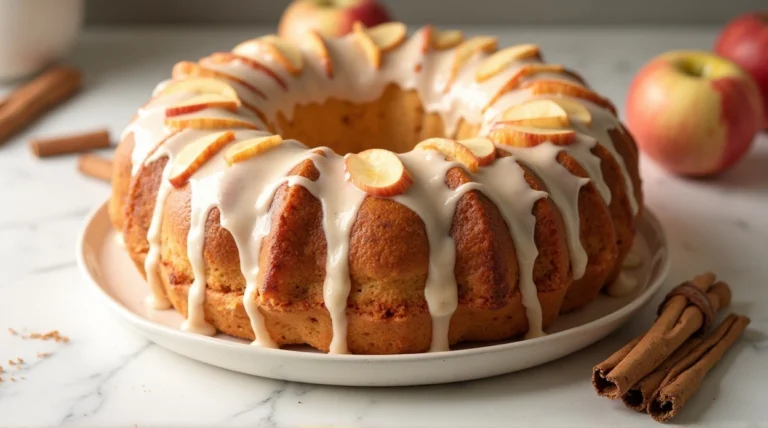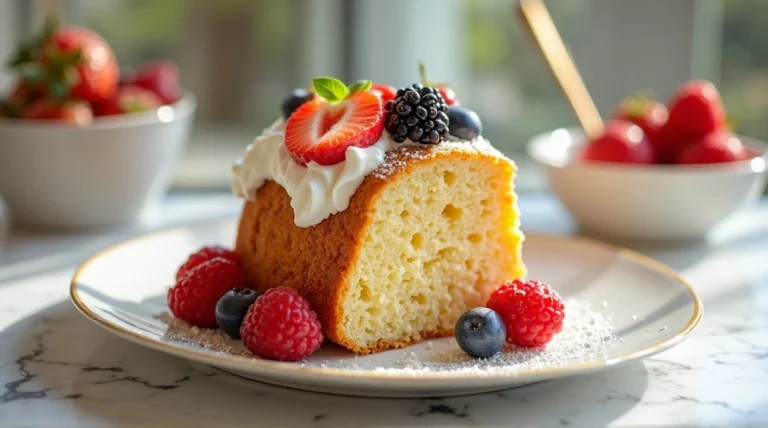
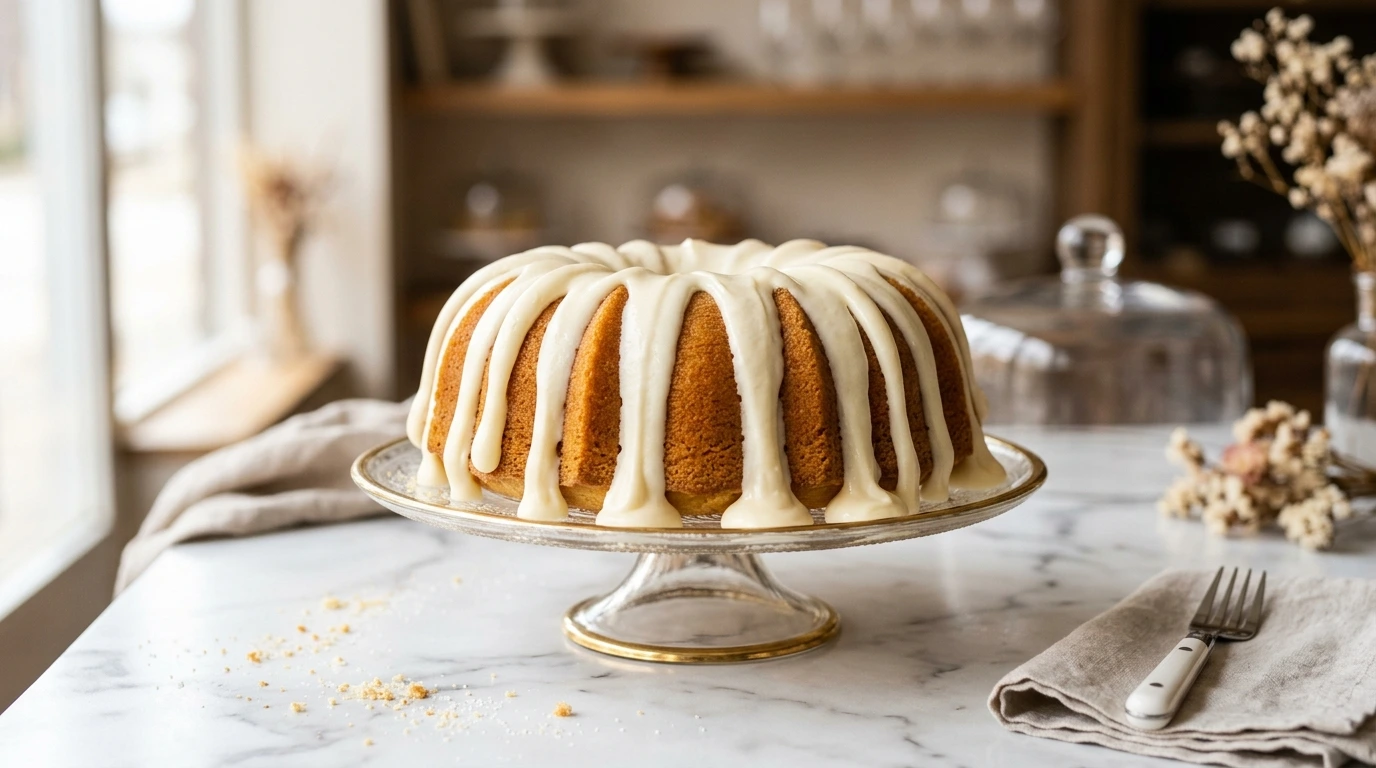
If you’ve ever walked past a Nothing Bundt Cakes bakery, you already know the draw. The little gold boxes. The rows of frosted bundtinis lined up like candy.
And that unmistakable swoop of thick, tangy cream cheese frosting dripping down the sides of a cake so moist it practically dissolves on the fork. It’s the kind of dessert that makes birthdays feel a little more official.
The problem is that a trip to the bakery isn’t always practical maybe there isn’t one near you, maybe you need a cake at 9pm on a Tuesday, or maybe you just want the satisfaction of pulling something that good out of your own oven. That’s where this copycat recipe comes in.
After a lot of testing and tweaking, this version gets remarkably close to the original: dense but tender crumb, a hint of almond underneath the vanilla, and a frosting that’s thick enough to hold its shape but soft enough to melt against warm cake.
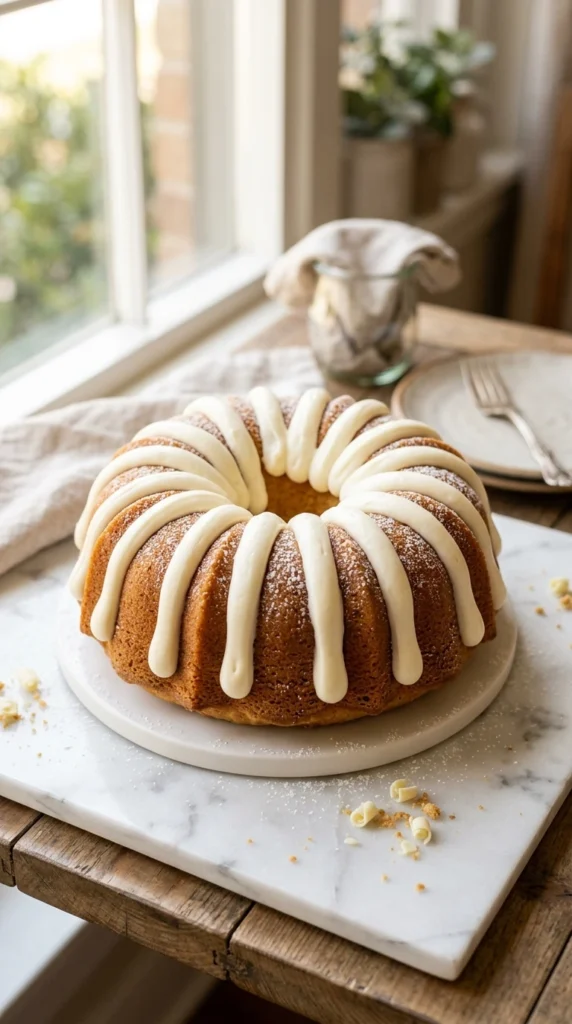
Table of Contents
What Makes the Original So Good
Before diving into the recipe, it helps to understand what you’re actually trying to recreate. Nothing Bundt Cakes built their entire brand on a few very deliberate choices, and understanding them is the key to nailing the copycat version at home.
The crumb is dense, not fluffy. A lot of home bakers instinctively want to whip extra air into their batter, but that’s actually the opposite of what you want here. The magic of this cake comes from a dense, pound-cake-adjacent texture moist and rich rather than light and airy. That’s why this recipe leans on sour cream and a generous amount of butter, and why the mixing method (creaming, then alternating dry and wet ingredients) matters more than you’d think.
There’s a secret flavor note. Almond extract is doing a lot of quiet work in the background. It’s not enough to taste like almond outright, but pull it out and the cake tastes noticeably flatter. Just half a teaspoon alongside the vanilla is enough to give it that signature bakery flavor that’s hard to place but easy to miss.
The frosting is a topping, not a coating. Unlike a birthday cake slathered edge to edge in buttercream, Nothing Bundt Cakes drizzles a thick cream cheese frosting over the top and lets gravity do the rest. It pools in the center, cascades down through the ridges, and leaves parts of the golden cake exposed. That’s a feature, not a shortcut it lets the frosting-to-cake ratio stay balanced instead of overwhelming.
Ingredients You’ll Need
| For the Cake | Amount |
|---|---|
| Cake flour | 3 cups |
| Baking powder | 1 tbsp |
| Salt | 1/2 tsp |
| Unsalted butter, softened | 1 cup |
| Granulated sugar | 2 cups |
| Large eggs | 4 |
| Sour cream | 1 cup |
| Whole milk | 1/2 cup |
| Vanilla extract | 1 tbsp |
| Almond extract | 1/2 tsp |
| For the Frosting | Amount |
|---|---|
| Cream cheese, softened | 8 oz |
| Unsalted butter, softened | 1/4 cup |
| Powdered sugar | 3 cups |
| Vanilla extract | 1 tsp |
| Milk (as needed) | 1 tbsp |
The one ingredient worth calling out specifically is the cake flour. It has a lower protein content than all-purpose flour, which means less gluten development and a more tender, delicate crumb. If you only have all-purpose flour on hand, you can fake a rough substitute by removing two tablespoons of flour per cup and replacing them with cornstarch, but the real thing gives noticeably better results if you can get it.
Step-by-Step: nothing bundt cake walnut creek
Start by preheating your oven to 325°F — lower and slower than a typical cake, which helps it bake evenly without drying out the edges before the center sets. While that heats up, grease your bundt pan generously, making sure to get butter and a dusting of flour into every ridge and groove. This step matters more than people expect; a cake that sticks to a beautifully detailed bundt pan is a heartbreaking way to end a baking session.
Whisk your dry ingredients together in one bowl and set them aside. In a separate large bowl, cream the butter and sugar together for a full three to four minutes — longer than feels necessary. This is what builds the base structure of the cake, and rushing it is one of the most common reasons homemade bundt cakes turn out denser or greasier than intended.
Add your eggs one at a time, beating well between each addition, then set that bowl aside too. In a small bowl, stir together your sour cream, milk, vanilla, and almond extract until smooth.
Now comes the part that separates a good bundt cake from a great one: alternating your dry and wet ingredients into the butter mixture in three additions, starting and ending with the dry ingredients. Mix just until each addition is incorporated overmixing at this stage develops gluten and can leave you with a tougher, chewier cake instead of that soft, tender bite you’re after.
Pour the batter into your prepared pan, smooth the top, and bake for roughly 55 to 70 minutes, checking with a toothpick starting around the 55-minute mark. Every oven runs a little differently, and bundt pans especially can vary in how evenly they conduct heat, so don’t rely on the clock alone.
Once it’s out of the oven, let the cake cool in the pan for 15 to 20 minutes before inverting it onto a wire rack. This resting period is important invert it too early and the cake can crack or stick; wait too long and it may be harder to release cleanly. From there, let it cool completely before frosting. This part takes patience, but frosting a warm cake is the fastest way to end up with a melted, sliding mess instead of that signature thick drizzle.
Making the Frosting
While the cake cools, beat the softened cream cheese and butter together until completely smooth, with no lumps remaining. Gradually add the powdered sugar and vanilla, beating until the mixture turns light and fluffy. If it’s too thick to drizzle, add milk one tablespoon at a time until you reach a consistency that’s pourable but still holds its shape once it lands on the cake.
Once the cake has cooled completely, spoon or pour the frosting over the top, letting it drip naturally down the sides and into the ridges. Resist the urge to spread it smooth the uneven, cascading look is exactly what makes it read as “Nothing Bundt Cakes” instead of just “bundt cake.”
Storing and Serving
This cake keeps beautifully. Store it covered in the refrigerator for up to five days, and let slices come to room temperature before serving so both the cake and frosting soften back up. It also freezes well unfrosted wrap it tightly and freeze for up to three months, then thaw and frost fresh whenever the craving hits.
Once you’ve got the base technique down, it’s an easy cake to riff on. Swap in cocoa powder for a chocolate version, fold in lemon zest and juice for something brighter, or top it with chopped pecans for a little crunch. But there’s something to be said for making the classic first it’s the one that made the brand famous for a reason.
FAQ
Can I use all-purpose flour instead of cake flour? Yes, though the texture will be slightly denser and less tender. To approximate cake flour, remove 2 tablespoons of flour per cup used and replace with 2 tablespoons of cornstarch, then sift together before measuring.
Why did my cake stick to the bundt pan? This usually comes down to greasing. Use softened butter (not spray) and get into every ridge and groove, then dust with flour and tap out the excess. Also make sure the cake cools in the pan for the full 15–20 minutes before inverting too soon and it can tear.
Can I skip the almond extract? You can, but it’s worth keeping if possible. It doesn’t make the cake taste like almond; it rounds out the vanilla and is a big part of what makes this taste like the bakery version rather than a generic vanilla cake.
How do I get the frosting to drip instead of just sitting on top? Consistency is everything. It should be thick enough to hold a ribbon shape when you lift the spoon, but loose enough to slowly spread. If it’s too stiff, add milk a teaspoon at a time. Also make sure the cake is fully cooled frosting on a warm cake will just melt and slide off.
Can I make this ahead of time? Yes. The unfrosted cake can be baked a day or two in advance and kept covered at room temperature, or frozen (well-wrapped) for up to 3 months. Frost it the day you plan to serve it for the cleanest look.
How should I store leftovers? Cover and refrigerate for up to 5 days. Let slices sit at room temperature for 20–30 minutes before serving so the cake and frosting soften back up.
Can I make mini bundt cakes or bundtinis instead of one large cake? Yes this batter works well in a mini bundt pan. Reduce the bake time significantly (start checking around 20–25 minutes) since smaller cakes bake much faster than a full-size bundt.